
Hire AI Developer – Your Nearshore AI Development Partner

Unleash the power of over 4,000 English-speaking AI professionals with Hire AI Developer. Catering specifically to US businesses, we ensure our talented team is available full-time within your time zones, providing you with seamless collaboration and no time lag.
But we’re not just about providing access to top-notch AI talent. We’re your end-to-end solution for managing your outsourced teams. From handling payroll and benefits to ensuring tax and local compliance, we’ve got you covered.
With us, you can effortlessly discover, onboard, and manage the crème de la crème of AI developers and professionals who are now in demand and hard to find. Our track record speaks for itself – we’ve built and scaled technology teams for a gamut of companies, from sprouting startups to Fortune 500 giants. Leveraging our expertise can be your secret weapon in harnessing the power of AI.
A Littie Bit Of History
As we navigated the early 2020s, the US found itself in the fast lane of AI innovation. From the conversational prowess of ChatGPT to the data-centric power of AI in big data and machine learning, the AI landscape was rapidly evolving. However, behind these groundbreaking advancements, a league of skilled AI talent was indispensable – the developers, product managers, machine learning experts, AI architects, data scientists, and robotics developers, to name a few.
In the pursuit of excellence, US companies soon realized that the quest for top-notch AI talent knows no boundaries. With the advent of robust collaborative software like Slack, Jira, and Microsoft Teams, the traditional office transformed into a global workspace. AI development teams could now collaborate, innovate, and create, regardless of geographical location, as seamlessly as they would in a shared physical space.
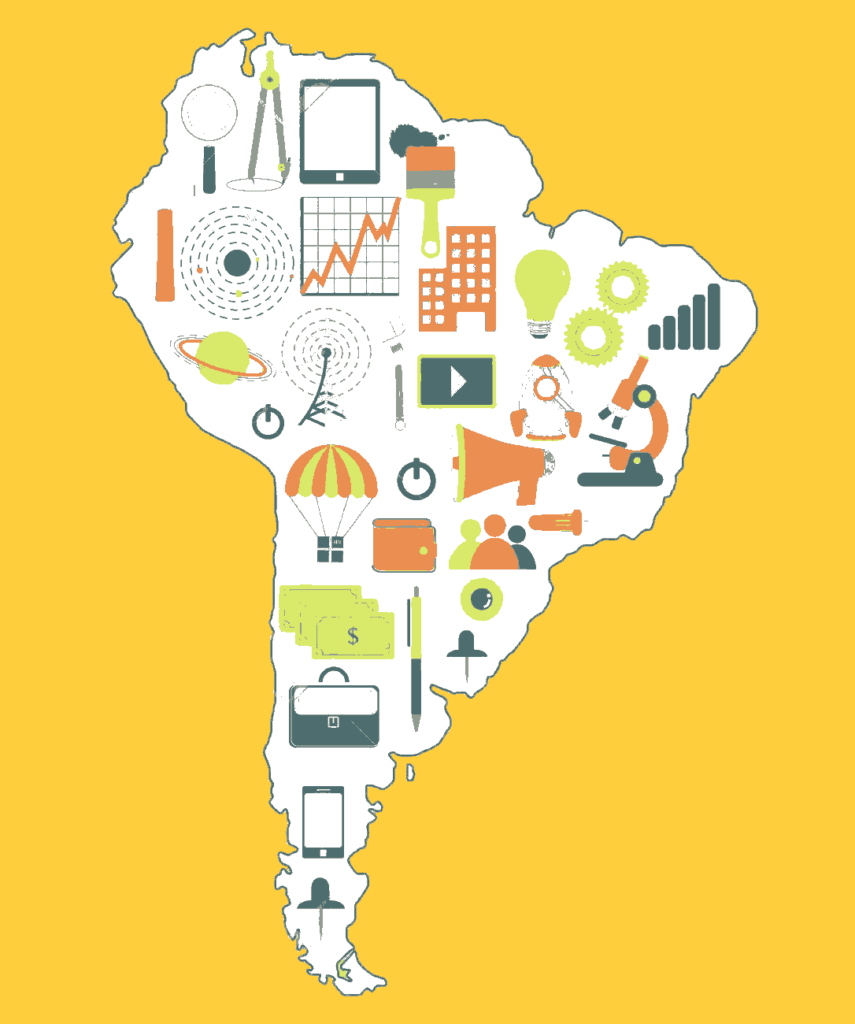
However, the high demand for AI talent underscored a challenge – access. US companies needed not just English-speaking AI developers, but also those who could operate within US time zones. Rising to this challenge, we embarked on a mission to build a talent network in Latin America. Our objective was to help US companies discover, recruit, and manage remote AI developers across the region, starting with Brazil – an emerging beacon in the global tech arena.
Why Work With Us?
We operate as an extension of your business helping you produce great AI Apps and Software
Expert AI Developers
Our team of expert AI developers are the heart of Hire AI Developer. Each member combines technical prowess with innovative thinking to tackle complex AI challenges. By continually investing in their professional growth, we ensure they stay abreast of the latest in AI technology.
Strong AI Expertise
Our strength is our deep-seated AI expertise. Having worked on numerous AI projects, we’ve mastered a wide spectrum of AI technologies. With Hire AI Developer, you don’t just hire a team; you tap into a reservoir of AI knowledge and experience.
We Put The Client First
At Hire AI Developer, our clients come first. We begin by understanding your business needs, shaping our services to fit your unique requirements. We’re more than just a service provider—we’re your partner in success.
Focused On Quality
Quality is our mantra at Hire AI Developer. Every AI solution undergoes rigorous testing to ensure it exceeds your expectations. Striving for excellence, we deliver robust, reliable AI solutions that offer maximum value without compromising on quality.

Our Hiring Process
Lots of Applicants
Every quarter, we are flooded with thousands of applications. Using their profiles and our proprietary algorithms, applicants are mapped to fitting open positions. This triggers our rigorous hiring process, helping us identify the finest candidates.
Online Testing
Candidates are assigned online tests specific to their skills, along with compulsory English and IQ tests. For instance, AI Developers are required to pass various tests including AI-specific areas, AI Programming, Machine Learning, AI Algorithms, and NLP, among others.
HR Interview
Post-examination, candidates undergo an HR interview. We assess their communication skills, commitment, and personality to ensure they’re a suitable match for us and our clients.
Full Technical Interview
Lastly, our expert Technical Interviewers hold a detailed interview. They probe potential projects and real-time problem-solving scenarios. Our clients hire AI developers who stand out in this interview, ensuring they procure top-notch development talent.
